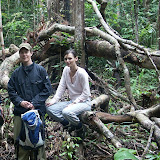
 |
| Ayahuasca Retreat - Aug 2006 |
Visit our website for info on our Ayahuasca and Yoga Retreats
|
| Ayahuasca Retreat - Aug 2006 |
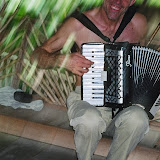 |
| Ayahuasca Retreat Feb 2003 |
 |
| Ayahuasca and Yoga Retreat Center |
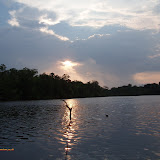
We have 57 Hectares (140 acres) of land with a lodge in the Allpahuayo Mishana Nature reserve. Our lodge is located directly on the river which is part of a 58,070 hectare nature reserve.
Due to a combination of geological factors and diverse soil types, the reserve supports a unique community of plant and animal species. It is the ‘jewel’ in the crown for bird-watchers and contains dozens of species which are unique to this area. The Reserve contains one of the highest biodiversities known in the Amazon basin. The Lodge is located directly on the Rio Nanay which is a tributary of the
Our lodge is situated in-between two bends of the river giving an amazing panoramic view. We have our own boat so trips can be made to some interesting, and extraordinarily beautiful places along the river. The lodge is a 2 hour river journey from

Our accommodation is in comfortable traditional cabins or tambos (dieting huts), a leaf roof supported by poles and with open sides (the most intimate way to sleep in the jungle). The beds benefit from a comfortable mattress and fly nets when necessary. The tambos are spread out to assure privacy and minimum disturbance from others. Participants have a choice of using either the cabins in the 'Casa Grande' annex or tambos for their retreat.
During the day when there are no activities, there will be hammocks to relax in, and you can read, or wander into the forest, or swim in the river (there is a small sandy beach). Our ceremonies and meeting will be held in either the Casa Grande with an open platform on stilts directly on the river with a magnificent view of the rainforest and star filled sky. or our maloca (ceremonial temple), a large circular tambo made of natural materials and shaped like a womb. We will eat our meals in the lodge, the traditional meeting place, where food is cooked on a wood fire.
Single Accommodation
One of the unique characteristics of our Retreat Centre is that we offer single accommodation. This ensures that participants can obtain the maximum benefit from their encounter with the plants. The Diet really needs to be taken in solitude and personal retreat without distractions. This is a defining characteristic of this programme. Typically other programmes do not offer this and dormitory / shared accommodation is usually the rule. Our Tambos (individual accommodation huts) are all different and are spread out, some with more isolation than others and we also have individual accommodation rooms in the wing of our Casa Grande for those who would prefer being close to the main facilities.

 Iquitos is the largest city in the Peruvian rainforest, with a population of around 400,000. It is the capital of Loreto Region and Maynas Province. It is generally considered the most populous city in the world that cannot be reached by road (except to Nauta 120 Km on the Rio Marañón).
 The only way to get there is via aeroplane or by river boat. The city in the 19th century was the centre of the Rubber industry but by the early 20th century the rubber trade had moved to the Far East, and the city had fallen into neglect and disrepair. It is now a place without an apparent purpose resplendent in its post-colonial splendour, literally in the middle of nowhere, a true frontier town.
When you stand on the Malecon at the edge of the city (and civilisation) .......you overlook thousands of miles of rainforest, a truly breathtakingly beautiful experience.This is a video clip of imagery of Iquitos. Including Belen market, Puerto Bellevista. Iquitos is the base where we leave for our Ayahuasca Retreats at Mishana.


Shipibo maestro Shaman Guillermo Arevalo who worked with our group on our Ayahuasca Retreats
Our intention in this journey is to provide the conditions and orientation to enable participants to follow a proper diet, and for it to be as near as possible to what indigenous people have done for thousands of years, (although we can avoid unnecessary hardship, in any case a diet is not a trial of endurance).

Participants will undertake to ‘diet’ a plant for a full six to eight days, selecting their plant from a range of options which will be explained by the maestro and depend on individual requirements. Some plants are good for specific ailments as, for example Chuchahuasi for arthritis and other bone conditions, although there is always a magical world opened up by the plant spirit. Other plants have specific spiritual benefits. Chirisanango and Ushpahuasanango, for example, open up the heart and are healing to emotions. Guayusa works very curiously on one’s dreams, affording an experience of being conscious while in fact asleep or dreaming. The plants used will all be compatible with Ayahuasca so that we can benefit from the plant diet during Ayahuasca ceremonies. There will be a programme of talks, exercises, individual sessions and group meetings without prejudicing the spirit of the diet. This is a way to learn from observation and intimate contact with nature, practical artistic exercises using local materials.
We will participate in the gathering and preparation of Ayahuasca, a prolonged ritual in which power is invoked from the planta maestra. We will learn about healing plants and how to find them.
Working with teacher plants is known as the ‘shaman’s diet’. The purpose of the diet is to prepare the body and nervous system for the powerful knowledge and expansion of consciousness given by teacher plants. In everyday life, the mind creates the illusion that we are separate from reality, and thus protects us, like a veil, from experiencing the vastness of the universe. Access to the truth without preparation could be a radical shock to the system. It offers a significant challenge for the rational Western mind to come to terms with the teacher plants, and a leap of imagination is required to incorporate the ‘other’ consciousness of the plant.The magical world to which we are transported by plants is not accessible through the verbal rational mind but through dream language or an expansion of the imagination. Thus dreams & our imaginative powers act like doorways during a plant diet and connect us with the plant spirit.
Some Plants
• Mocura; taken orally or used in floral baths to raise energy, or take you out of a saladera (a run of bad luck, inertia, sense of not living to the full). This plant gives mental strength and you can feel its effects as also with ajosacha, both are varieties of garlic and have a penetrating aroma. Mental strength means it could be good to counter shyness, find one’s personal value or authority. Medicinal properties include asthma, bronchitis, reduction of fat and cholesterol. Another of its properties is that it burns of excess fat.
• Piñon Colorado; this plant has short lived effect after drinking but helps dreaming later on when you go to sleep. Piñon Colorado can also be worked with as a planta maestra (teacher plant). Medicinal properties include dealing with Insect bites and stings, vaginal infections, and bronchitis. It is possible to take the resin which is much stronger but toxic if too much ingested. The resin can be applied directly to the skin.
• Chiricsanango; this plant is good for colds and arthritis and has the effect of heating up the body, so much so that the maestro advises a cold shower after each dose! This plant can be used in baths for good luck, and bring success to fishing, hunting etc. This planta maestra also makes possible for people to open up their heart to feel love for people and animals, and identify with other people as though brothers and sisters.
It grows mainly in the Upper Amazon and only a few restingas (high ground which never floods) in the Lower Amazon. The shamans say that plants connect us with nature because they take their nourishment directly from the earth, as well as the sun’s rays, the air. They allow us to know and recognize ourselves. A shaman must know this and must love his people to heal them. The gift of Chirisanango is self esteem i.e the ability to recognise ourselves.
The shamans say that this plant opens up the shamanic path, assuming that we are prepared to live under the rules of shamanism, to do this we need courage and no fear of extremes or negative & challenging circumstances. We need to understand what role we will play in society and have the heart of a warrior.
• Guayusa; It is good for excessive acidity and other problems in the stomach and bile. Also it is both energizing and relaxing at the same time and develops mental strength. This also has the most interesting effect of giving lucid dreams i.e when you are dreaming you are aware that you are dreaming. The plant is also known as the "watchman's plant", as even when sleeping you are aware of the outer physical surroundings.
On another personal note, I found the experience with this plant also to be quite incredible. I found that the usual boundary between sleeping and being awake to be more fluid than I had anticipated. Even now, sometime after taking the plant my dreams are more colourful, richer, and lucid than before. For those interested in 'dreaming' this is certainly the plant to explore.
• Ajo Sacha; An important planta maestra in the initiation of Amazonian shamans. Mental strength, acuity of mind, saladera (explained above), for ridding spells, self healing. Originally used to enhance hunting skills by covering up human smell with the garlic smell of Ajosacha.
On another personal note, I found my senses being altered and enhanced with this plant. I could zoom in and focus on sounds emanating from the rainforest, my sense of smell became sharper, and in some ineffable way I could tune into the breathing or rhythm of the rainforest. The sound of insects and birds was no longer a random phenomenon, these sounds became a rhythmic breath, rising and falling. No wonder that it is used for hunting as one's sense are heightened in an incredible way.
• Icoja; A bark used for malaria, fever, an astringent, disinfectant for healing septic wounds. Used against Uta - a kind of leprosy found in the Amazon. Wounds are washed directly with this plant, and it is also used for an infectious disease (Pilagra) in children.
• Chanca piedra; Used for Kidney problems especially kidney stones (hence the name ‘stone crusher’), gall bladder, disinfectant. This is recognised as a gall bladder and liver tonic. It is also used for cleansing the urinary system and for dealing with intestinal parasites. This plant is only used for its many pharmaceutical properties, not a planta maestra per se.
• Sachamangua; This is a large single seeded fruit, which when you crush the fruit and squeeze the juice into the nose, it warms the area locally (it can sting a bit), and it is effective for curing sinusitis. It also helps the eyesight and restores visual acuity by relieving the pressure from the sinuses. You eliminate a lot of mucus and this gives relief. The fruit when ripe is normally eaten peeled or roasted, and is a little like the aguaje fruit, but for medicinal uses it must be green. It is also good for tired feet in an poultice. Taken orally it is useful for the liver when struggling with the digestion of fat, it is also a treatment for gases. Fungal spores in the nose can cause itching, rhinitis or allergy and Sachamangua is effective for this too. Athlete’s foot can also be treated with the dry powder, like talcum powder, prepared from this fruit.
• Cat’s Claw (una de gato); Cat's Claw is a tropical vine that grows in rainforest. This vine gets its name from the small thorns at the base of the leaves, which looks like a cat's claw. These claws enable the vine to attach itself around trees climbing to a heights up to 150 feet. The inner bark of this vine has been used for generations to treat inflammations, colds, viral infections, arthritis, and tumors.
Cat's Claw can be used as tonic to boost the body's immune system. And is considered by many as a ‘balancer’ returning the body's functions to a healthy equilibrium. Its has anti-inflammatory and blood cleansing properties as well as being able to clean out the entire intestinal tract and therefore helps treat a wide array of digestive problems such as gastric ulcers, parasites, and dysentery.
From a psycho-spiritual, plant spirit, or shamanic perspective in which disease and illness can be initiated by a spiritual imbalance within a person causing the person to become de-spirited, or losing heart (in the West we would call this depression), it can restore this inner sacred union of spirit and physical body.
The medicinal properties of this plant are officially recognized by the Peruvian government and it is a protected (for export) plant. It is available widely in the west in capsule form. In the markets in Iquitos it is available in bark form, and many indigenous communities
• Boahuasca; Used to heal Cancer of the stomach and intestines and prolapses. Also used against Uta, and cancerous, malignant wounds. The shaman's make an ointment from the ash and apply directly.
The underlying truth that is revealed in working with the plant spirit or consciousness is that we are not separate from the natural world. We perceive ourselves to be separate beings with our minds firmly embedded within our being (typically our head). The plants can show you that this way of being is an illusion and that we are all connected, all of us and everything else is a discrete element in the great universal field of consciousness. This is an area where the ancient knowledge of the peoples of the rainforest and modern quantum physics point in the very same direction, “Reality is an illusion, albeit a persistent one’ Albert Einstein.
Another way of seeing the shaman’s diet is that like the platitude ‘all roads lead to Rome’, all plants lead through different paths of experiences to the same place, i.e a deep and expanded understanding of one’s place in the world around us and a recognition of self as an intrinsic element of this.
The indigenous people of the Amazon see life as having enough purpose just as it is. Fulfilment comes from being in tune with the spirits so there is an abundance of fish, bananas, yucca for making masato (alcoholic beverage), and plenty of healthy children, in short, life is for being happy!
Click for more info on our Andean, and Amazon Ayahuasca Yoga Retreats

The Amazon Rainforest is home to many thousands of plant species, and has the richest bio-diversity on the planet. Plants and herbs used for medicinal purposes flourish there. The traditional healers and shamans of the Amazon have been working with these remarkable plants for thousands of years. We explore in this article these ancient traditions and knowledge of the plant shamans by the author of Plant Spirit Shamanism (published by Destiny Books USA).
Howard G Charing, and Peter Cloudsley join Amazonian Shamans, Javier Arevalo and Artidoro in discussions about the medicinal & spirit healing plants and their use.

These are a kind of Marigold, and they are used in baths particularly for children with ‘mal aire’. This malady occurs when a family member dies and leaves the child unhappy and sleepless. The spirit of the dead grandfather - or whoever it was - lingers and makes the child sick. The spirit is sad to go and stays in the house after the person is buried and it tries to caress and comfort people in the family. This makes them ill.
Rosa Sisa also controls vomiting in general, as well as being used in floral baths for good luck.
Typically an envious neighbour will grab a handful of earth from the cemetery and throw it into your house to spread boredom and heavy feelings.
Again, when something is wrong in the house - people are bored or agitated - you get a bucket of water and add crushed Rosa Sisa flowers and Camalonga and wash the floors of the house with a brush to cleanse it.
Alternatively you could have the flowers in a vase in the house for the same purpose. Many people grow them either side of the front door of their house to absorb the negativity of people who look in enviously to see what possessions they have. The flowers go black but later they recuperate themselves.
Marigolds can also be used for making wishes, blowing with the wish in mind - like we do with a dandelion - because it is yellow, the colour of the sun.
Manchare or susto (fright) are maladies commonly suffered by children, and treated with Camalonga – a tree which grows wild in the forest, but many people grow it in flower pots in the city. It smells like onions and garlic and can be macerated in alcohol to be rubbed onto the person. In cases requiring soul retrieval a prayer or chant would be used at the same time.
Typically a child gets Manchare when playing in the trees and jump down to the ground and receive a much bigger bump than they expected. In this case the Rosa Sisa is tied into a bunch with a white ribbon and brushed all over the body from the head down. This is because the spirit returns through the crown of the head. A little prayer is said to invoke the spirit back, using the name of the child.It can be used in emplasts for fevers too.

Most commonly, it is used in floral baths for changing ‘luck’. You can find after a couple of weeks, things have changed, you find a job or whatever. It is also cooked in water and taken orally for interior fevers. In aguardiente it stops hair loss, if applied to the scalp directly. Taken macerated in alcohol, it can help one to find tranquillity when agitated and irritable. taken orally or used in floral baths to raise energy, or take you out of a saladera (a run of bad luck, inertia, sense of not living to the full). This plant gives mental strength and you can feel its effects as also with ajosacha, both are varieties of garlic and have a penetrating aroma. Mental strength means it could be good to counter shyness, find one’s personal value or authority. Medicinal properties include asthma, bronchitis, reduction of fat and cholesterol. Another of its properties is that it burns of excess fat.
Huairacaspi
It comes in two varieties, a high tree with a thick trunk and a small slim tree with little leaves. It is the same tree as tornillo which is good timber. The branch can be bent double without breaking, and is good for doing yoga and for flexibility in general.
It is good for prolepses, chronic diarrhoea, hepatitis, arthritis, broken bones, and cold in the body. As a teacher plant it is good for disorientation, and sense of being lost.
After drinking you need to take a shower as it makes you sweat out all the toxins.
Ushcaquiro
This plant is very little known and used. Like chuchahuasi, it is good after operations, mothers caring for their babies, vaginal discharge, cancer, cold. It is prepared in water or alcohol. Painkiller.
Ushcaquiro, Huairacaspi and Chiricsanango together make a good treatment for arthritis.
Guayusa
Has a female spirit and makes you dream of beautiful things and takes the laziness out of you.
Albaca
This is good to have in the house, it works better than an aerosol spray for fresh air because the flowers burst into flower with a perfume. Also good for floral baths to make you smell good so you attract lots of friends. Also if you have a row with a friend, they will come back to you. In cases of gastritis, appendix or gale-bladder problems you can take it as a tea.Even when dry is still smells.
Shimi Pampana
Is a root like a potato and a constituent of Pusanga. It comes in male (white) and female (red) forms and tastes like yucca. It is very good for people with excessive anger. You grate it to get the juice, and put it in soup, coffee or whatever and sometimes it is put secretly into a person’s drink to calm them down, especially when there is a lot of arguing in the family. You can bathe in it too. The dry powder obtained from drying the root, is good for sun burn, common in summer when the river is low and people go to the beautiful beaches to swim. It takes out the impurities of the skin without desiccating it.


PART 2
Shamans from different cultures and traditions have been using psychoactive plants since the dawn of human emergence. These plants have been used traditionally for guidance, divination, healing, maintaining a balance with the spirit or consciousness of the living world.
Howard G. Charing and Peter Cloudsley talk with Maestro Juan Navarro
Juan Navarro was born in the highland village of Somate, department of Piura. He is a descendant of a long lineage of healers and shamans working with the magical powers of Las Huaringas.
What is the relationship of the maestro
with San Pedro?
In the north of Peru the power of San Pedro works in combination with tobacco. Also the sacred lakes Las Huaringas are very important. This is where we go to find the most powerful healing herbs which we use to energize our people. For example we use dominio [linking one’s intent with the spirit power of the plants] to give strength and protection from supernatural forces such as sorcery and negative thoughts. It is also put into the seguros - amulet bottles filled with perfume, plants and seeds gathered from Las Huaringas. You keep them in your home for protection and to make your life go well. These plants do not have any secondary effects on the nervous system, nor do they provoke hallucinations. San Pedro has strength and is mildly hallucinatory, but you cannot become addicted. It doesn’t do any harm to your body, rather it helps the maestro to see what the problem is with his patient. Of course some people have this gift born in them - as our ancestors used to say, it is in the blood of a shaman.
Is San Pedro a ‘teacher plant’?
Of course, but it has a certain mystery.You have to be compatible with it because it doesn’t work for everybody.The shaman has a special relationship with it. It circulates in the body of the patient and where it finds abnormality it enables the shaman to detect it. It lets him know the pain they feel and whereabouts it is. So it is the link between patient and maestro. It also purifies the blood of the person who drinks it. It balances the nervous system so people lose their fears, frights and traumas, and it charges people with positive energy. Everyone must drink so that the maestro can connect with them. Only the dose may vary from person to person because not everyone is as strong.
What about the singado? (inhalation of tobacco juice through the nostrils) The tobacco leaf is left for two to three months in contact with honey, and when required for the singado it is macerated with aguardiente, or alcohol. How it functions depends on which nostril is used; when taken in by the left side it is for liberating us of negative energy, including psychosomatic ills, pains in the body, bad influences of other people - or ‘envy’ as we call it here. As you take it in you must concentrate on the situation which is going badly, or the person which is giving out a negative energy.
When taken through the right nostril it is for rehabilitating and energizing, so that your projects go well. It’s not for getting high on. Afterwards you can spit the tobacco out or swallow it, it doesn t matter. It has an interrelation with the san pedro in the body, and intensifies the visionary effects.
Tobacco is an important plant in the ceremonies - can you smoke in the session? No, no, no. It may be the same plant but here another element comes into play, which is fire. As the session is carried out in darkness, the fire in the darkness can perturb, create a negative reflection or vision. It can cause trauma.
You use a chungana (rattle) during the san pedro sessions and I ’see’ the sound as a beam of a light penetrating the darkness. Yes, sound and light are interrelated. Chunganas are used to invoke the spirits of the dead, whether of family or of great healers, so that they may feel comfortable with us. the chunganas are to give us ‘enchantment’ (protection and positive energy) and it has a relaxing effect when taking san pedro.
What is the power of the artes - the objects on the mesa?
They come from Las Huaringas, where a special energy is bestowed on everything, including the healing herbs which grow there and nowhere else. If you bathe in the lakes it takes away all your ills. You bathe with the intention of leaving everything negative behind. People go there to leave their enemies behind, so they can’t do them any harm. After bathing, the maestro cleanses you with these artes, swords, bars, chontas (bamboo staffs), saints, and even huacos (the powers from ancient sacred sites). They ‘flourish’ you - spraying you with agua florida
(perfume) and herb macerations, and giving you sweet things like limes and honey, so your life flourishes. We maestros also need to go to Las Huaringas regularly because we make enemies from healing people, so we need to protect ourselves. The reason for this is that two forces exist: the good and the bad. The bad forces are from the pacts which the brujos (sorcerors with negative
intentions) make with the devil. The brujo is the rival of the curandero or healer. So when the curandero heals, he makes an enemy of the brujo. It’s not so much because he sends the bad magic back, as because he does the opposite thing to him, and they want supremacy in the battle. Not far from Las Huaringas is a place called Sondor, which has its own lakes. This is where evil magic is practiced and where they do harm in a variety of ways. I know because as a curandero I must know how sorcery is practiced, in order to defend myself and my patients.
Do people go there secretly?
Of course no one admits to going there, but they pass through Huancabamba just like the others who are going to Las Huaringas. I know various people who practice bad magic at a distance.They do it using physical means, concentrating, summoning up a person’s soul, knowing their characteristics etc. and can make them suffer an accident, or make an organ ill or whatever, or make their work go badly wrong.They have the power to get to their spirit. And people can even do harm to themselves. For example, if a person has bad intentions towards another and that person is well protected with an encanto, (amulet) then he will do himself harm.
How does the ‘rastreo’ (diagnosis through psychic means) work? Are you in an altered state? No, I’m completely normal and lucid. What allows the reading of a person’s past, present or future, is the strength of the san pedro and tobacco. It is an innate capability -not everybody has the gift, you can’t learn it from someone, it is inherited. The perceptions come through any one of the senses - sound, vision, smell, or a feeling inside of what the person is feeling, a weakness, a pain or whatever. Sometimes, for instance, a bad taste in the mouth may indicate a bad liver. All the things on the mesa are perfectly normal, natural things: chontas, swords, stones etc. They have just received a treatment - like a radio tuned to a certain frequency - so they can heal particular things, weaknesses or whatever. But always it is necessary to concentrate on the sacred lakes, Las Huaringas.
Is it necessary for the maestro to take San Pedro to have vision? Of course, he must take San Pedro and tobacco. But it is to protect himself from the person’s negativity and illness, not because he needs it to have the vision.
In conclusion, we must acknowledge that we, as humans, have realised from earliest times that knowledge goes beyond sensory awareness or the rational way of understanding the world. San pedro can take us directly to a telepathic communion and show us that there is no such thing as an inanimate object. Everything in the universe is alive and has a spirit. This is the gift of the plants which offer us a doorway into the infinite.
Howard G. Charing, is an accomplished international workshop leader on shamanism. He has worked some of the most respected and extraordinary shamans & healers in the Andes, the Amazon Rainforest, and the Philippines. He organises specialist retreats to the Amazon Rainforest at the dedicated centre located in the Mishana nature reserve. He is the author of the best selling book, Plant Spirit Shamanism (Destiny Books USA).
Visit our website for details on our Andean and Ayahuasca Retreats in Peru

Shamans from different cultures and traditions have been using psychoactive plants since the dawn of human emergence. These plants have been used traditionally for guidance, divination, healing, maintaining a balance with the spirit or consciousness of the living world.
Howard G. Charing and Peter Cloudsley talk with Maestro Juan Navarro
The hallucinogenic San Pedro cactus has been used since ancient times, and in Peru the tradition has been unbroken for over 3,000 years. The earliest depiction of the cactus is a carving showing a mythological being holding a San Pedro, and dates from about 1300 bc. It comes from the Chavín culture (c.1400-400 bce) and was found in a temple at Chavín de Huantar, in the northern highlands of Peru. Later, the Mochica culture, (c.500 ce) used the cactus in their iconography. Even in present day mythology, it is told that God hid the keys to heaven in a secret place and San Pedro used the magical powers of a cactus to discover this place; later the cactus was named after him.La Mesa Norteña
Juan Navarro was born in the highland village of Somate, department of Piura. He is a descendant of a long lineage of healers and shamans working with the magical powers of the sacred lakes known as Las Huaringas which stand at 4,000 metres and have been revered since earliest Peruvian civilization. At the age of eight, Juan made his first pilgrimage to Las Huaringas, and took San Pedro for the first time. Every month or two it is necessary to return here to accumulate energy and protection to heal his people. As well as locals and Limeños (people from Lima), pilgrims also come from many parts of South America.
During the sessions Juan works untiringly, assisted by his two sons - as is common in this traditions - in an intricate sequence of processes, including invocation, diagnosis, divination, and healing with natural objects, or artes. The artes are initially placed on the maestro’s altar or mesa, and picked up when required during the ceremony. These artes are an astonishing and beautiful array of shells, swords, magnets, quartzes, objects resembling sexual organs, rocks which spark when struck together, and stones from animals’ stomachs which they have swallowed to aid digestion! The artes are collected from pre-Colombian tombs, and sacred energetic places, particularly Las Huaringas.They bring magical qualities to the ceremony where, under the visionary influence of San Pedro, their invisible powers may be experienced. The maestro’s mesa - a weaving placed on the ground on which all the artes are placed, (mesa also means ‘table’ in Spanish) - is a representation of the forces of nature and the cosmos.Through the mesa the shaman is able to work with and influence these forces to diagnose and heal disease.
The traditional mesa norteña has three areas: on the left is the campo ganadero or ‘field of the dark’; on the right is the campo justiciero or the ‘field of the light’ (justiciero means justice); and in the centre is the campo medio or ‘neutral field’, which is the place of balance between the forces of light and dark. It is important for us not to look at these forces as positive or negative - it is what we human beings do with these forces which is important. Although the contents and form of the artes varies from tradition to tradition, the mesa rituals serve to remind us that the use and power of symbols extends throughout all cultures.
San Pedro Cactus
San Pedro (trichocereus pachanoi) grows on the dry eastern slopes of the Andes, between 2,000 - 3,000 metres above sea level, and commonly reaches six metres or more in height. It is also grown by local shamans in their herb gardens. As can be imagined, early European missionaries held the native practices in considerable contempt, and indeed were very negative when reporting the use of the San Pedro. Yet a Spanish missionary, cited by Christian Rätsch, grudgingly admitted the cactus’ medicinal value in the midst of a tirade reviling it: “It is a plant with whose aid the devil is able to strengthen the Indians in their idolatry; those who drink its juice lose their senses and are as if dead; they are almost carried away by the drink and dream a thousand unusual things and believe that they are true. The juice is good against burning of the kidneys and, in small amounts, is also good against high fever, hepatitis, and burning in the bladder.” A shaman’s account of the cactus is in radical contrast:
“It first … produces … drowsiness or a dreamy state and a feeling of lethargy … a slight dizziness … then a great ‘vision’, a clearing of all the faculties … it produces a light numbness in the body and afterward a tranquillity. And then comes detachment, a type of visual force … inclusive of all the senses … including the sixth sense, the telepathic sense of transmitting oneself across time and matter … like a kind of removal of one’s thought to a distant dimension.”
San Pedro, considered the ‘maestro of the maestros’, enables the shaman to make a bridge between the visible and the invisible world for his people.The Quechua name for it is punku, which means ‘doorway’. The doorway connects the patient’s body to his spirit; to heal the body we must heal the spirit. San Pedro can show us the psychic causes of illness intuitively or in mythical dream language. The effects of San Pedro work through various stages, beginning with an expanded physical awareness in the body. Soon this is followed by euphoric feelings and then, after several hours, psychic and visionary effects become more noticeable.
Howard G. Charing, is an accomplished international workshop leader on shamanism. He has worked some of the most respected and extraordinary shamans & healers in the Andes, the Amazon Rainforest, and the Philippines. He organises specialist retreats to the Amazon Rainforest at the dedicated centre located in the Mishana nature reserve. He is the author of the best selling book, Plant Spirit Shamanism (Destiny Books USA).

 A look at the rich and powerful spiritual legacy of the Andean civilization which is only now being properly recognised after 500 years of obscurity. This interview of Doris Rivera Lenz, was conducted by Howard G. Charing & Peter Cloudsley. This interview appeared in Sacred Hoop Magazine Issue 57, and the book Plant Spirit Shamanism (Destiny Books USA).


