This booklet contains original source interviews with three Shipibo ayahuasca shamans.
By Howard G Charing and Peter Cloudsley.
Shipibo Ayahuasca Shamans
Showing posts with label visionary plants. Show all posts
Showing posts with label visionary plants. Show all posts
Friday, May 29, 2009


Tuesday, August 19, 2008
Ayahuasca is declared a national cultural heritage in Peru

EL COMERCIO (LIMA) Sunday July 13th 2008
DECLARATION TO PROTECT THE TRADITIONAL RITUAL USE AND SACRED CHARACTER of AYAHUASCA
Ayahuasca declared a national cultural heritage
This plant is considered an essential part of the identity of the Amazonian peoples of Peru.
The knowledge and traditional uses of Ayahuasca practiced by the Amazonian indigenous communities, was declared a cultural heritage of the nation by the Institute of National Culture (INC). This announcement was made yesterday in the publication of Directorial Resolution 836 by that body, in the official gazette "El Peruan".
According to the declaration, the ritual use of Ayahuasca is one of the fundamental pillars of the identity of the Amazonian people. It's ancestral use in traditional rituals, with therapeutic benefits directly related to the qualities of the plants, has guaranteed its cultural continuity.
The provision states that the measure seeks to protect the traditional use and the sanctity of the ritual of Ayahuasca, and to differentiate between this and Western commercial and consumer interests.
The Ayahuasca is a plant species that has an extraordinary cultural history with it's psychotropic qualities as it is an essential ingredient of a brew in conjunction with the plant known as Chacruna. In the indigenous Amazonian world this plant brew is regarded as wise teacher.
ORIGINAL SPANISH TEXT
El Comercio Domingo 13 de julio del 2008
BUSCAN PROTEGER USO TRADICIONAL Y CARACTER SAGRADO DEL RITUAL
Declaran patrimonio cultural de la nacion a uso de la ayahuasca
Planta es considerada parte essencial de la identidad de los pueblos amazonicos del Peru. Los conocimientos y usos tradicionales de la ayahuasca practicados por las communidades nativas amazonicas fueron declarados patrimonio cultural de la nacion por el Institiuto Nacional de Cultura (INC). Ello se dio a conocer ayer tras la publicacion de La Resolucion Directoral 836 de esa entidad en el diario oficial “El Peruan”.
Segun se consigna en el texto, la practica de sesiones rituales de ayahuasca constituye uno de los pilares fundamentales de la identidad de los pueblos amazonicos. Su ancestral uso en los rituales tradicionales, vinculado a las virtudes terapeutics de la plants, ha garantizado su continuidad cultural.
La disposicion establece que la medida busca proteger el uso tradicional y el caracter sagrado del ritual de ayahuasca, con el fin de differnciaro de los usos occidentales descontextualizados que tienen propositos comerciales y consumistas.
La ayahuasca es una especie vegetal que cuenta con una extraordinaria historia cultrural en virtud sus cualidades psicotropicas, ya que es ingrediente esencial de un brebaje asociado a la planta conocida como chacruna. En el mundo indigena amazonico se la considera una planta sabia o maestra.
Sunday, May 18, 2008
Pablo Amaringo - Video

A video montage of the great visionary artist Pablo Amaringo. Taken on visits over the years to his home and gallery in the jungle city of Pucallpa Peru. Read or Download the interview with Pablo Amaringo by Peter Cloudsley and Howard.
Tuesday, May 13, 2008
Ayahuasca and Yoga Retreat - August 2006
A Photo gallery of our Ayahuasca and Yoga Retreat - August 2006
Visit our website for info on our Ayahuasca and Yoga Retreats
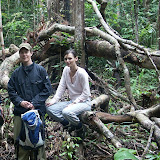 |
| Ayahuasca Retreat - Aug 2006 |
Visit our website for info on our Ayahuasca and Yoga Retreats
Thursday, May 8, 2008
Ayahuasca Retreat February 2003 - photos
A little dip into the photo archives. Here is gallery of our Ayahuasca Retreat in February 2003
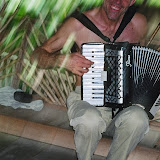 |
| Ayahuasca Retreat Feb 2003 |
Friday, May 2, 2008
The Shipibo and their beautiful Art and Crafts

The Shipibo people of the Upper Amazon in Peru, have a unique and complex form of visionary art. Underlying the intricate geometric patterns of great complexity displayed in the art of the Shipibo people is a concept of an all pervading magical reality which can challenge the Western linguistic heritage and rational mind.
To View a gallery of the Shipibo Art and Crafts;
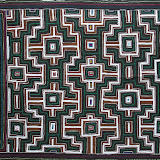 |
| Art of the Shipibo |
Click to read an article on the beautiful and unique art of the Shipibo
Thursday, May 1, 2008
Andean Shamanism Retreat - Web Album
 |
| Andean Shamanism Retreat - Peru March 2008 |
For information about our Retreats and the shamans we work with, visit our website:
Tuesday, April 29, 2008
The Incredible Art of the Shipibo People - Part 2

A Video of Shipibo craftswoman Teresa, showing traditional painting (Part 2).
Friday, April 18, 2008
The incredible art of the Shipibo people - Part 1
 The incredible art of the Shipibo people - Part 1
Shipibo craftswoman Teresa, showing traditional painting. In this video Teresa starts with a blank piece of cotton and within an hour and a half completes a fascinating example of the traditional art of the Shipibo people of the Upper Amazon in Peru.
For a detailed article on the world of the Shipibo;
http://www.shamanism.co.uk/Articles/shipibo.pdf
Wednesday, April 16, 2008
Ayahuasca Retreat - the view by the River at Mishana

Taking it nice and easy on the deck of Mishana Retreat Centre looking at some boats on Rio Nanay. Mishana is in a national reserve. Video from Eagle’s Wing Ayahuasca Retreat.
Visit our website for info on our Ayahuasca and Yoga Retreats in the Amazon
Thursday, February 28, 2008
Shipibo Ayahuasca Shaman Leoncio Garcia
The Shipibo are one of the largest ethnic groups in the Peruvian Amazon. These ethnic groups each have their own languages, traditions and culture. The Shipibo which currently number about 20,000 are spread out in communities through the Pucallpa / Ucayali river region. They are highly regarded in the Amazon as being masters of Ayahuasca, and many aspiring shamans and Ayahuasqueros from the region study with the Shipibo to learn their language, chants, and plant medicine knowledge.
click to visit our website www.shamanism.co.uk for details on our Ayahuasca Yoga Retreats in the Amazon.
Interviewed at Mishana Private Retreat Centre, Amazon Rainforest with Peter Cloudsley and Howard G Charing August 2005.
We interviewed Shipibo maestro Leoncio Garcia, a man in his mid seventies but with the appearance of a man twenty years younger. Again a testimonial to the youth giving qualities of Ayahuasca and the plant medicines of the Amazon Rainforest.

I didn’t become a shaman until I was 50, I am now 74. I was always so busy working in the chacra, or cutting wood, it was only when I began to get a bit older. Until then I had taken Ayahuasca for all the usual reasons of health, but that was all. After deciding to do the diet I drank Ayahuasca seriously but I didn’t see anything and didn’t think I would learn anything but still I kept on drinking every night and didn’t sleep. With just one day to go before completing three months’ diet, I had a tremendous vision and I began to chant and continued all night until dawn. I saw under the earth, under the water, and into the skies, everything. Probably I was learning from the sprits during the diet but I didn’t understand. After that I could see what the matter was with people. I dieted pinon Colorado and tobacco first and then tried all the other plants.
This was in San Francisco, a Shipibo community on Yarinacocha, Pucullpa where I was born. After this I went to Huancayo for six months to try my medicine. Then I went to Ayacucho and then a Senor took me to Lima to heal his wife. After two months I was taken to Trujillo and then Arequipa, Cusco, Juliaca, Puno. Everything worked out well and I worked with a doctor once who was not very successful and soon there were people queuing outside her consultancy. Eventually I came to Iquitos in 2000 and I haven’t had time to return to my family since then, I just send them money.
When I go round to people blowing tobacco smoke it is to give them arcanas, to protect them so that when things happen around them it doesn’t hurt them or make them ill.
Leoncio tells a Shipibo (cautionary) myth. There was once a wise man called Oni who knew what each and every healing plant could be used for. He knew all their names and one day he saw a liana and recognized it as Ayahuasca and he learned to mix it with Chacruna. One night he tried it and learned so many things that he carried on drinking it. But because he went on drinking so long and often he stopped eating and drinking, and just chanted day and night. Now he had two sons and they said ‘come and have breakfast Papa’, but he carried on drinking Ayahuasca and when they tried to pick him up, he was stuck to the ground and couldn’t be moved. So they left him chanting to all the plants everyday and night and they noticed that Ayahuasca was growing out from his fingers. So the sons went back to their chacras and after a month came back again, to see their father. Everywhere Ayahuasca ropes had tangled around him and still he continued chanting day after day and the forest carried on growing around him. After a few more months, he had merged with the forest itself and that is why its called Ayahuasca, rope of the dead and in Shipibo Oni.click to visit our website www.shamanism.co.uk for details on our Ayahuasca Yoga Retreats in the Amazon.
Shipibo Ayahuasca Shaman - Benjamin Ochavano

Conversation with Benjamín Ochavano, Peru 2002
Howard G Charing & Peter Cloudsley interviewed Shipibo Ayahuasca Shaman Benjamin Ochavano in the Amazon Rainforest of Peru, who is in his mid seventies to discuss how Ayahuasca can help those Westerners who are seeking personal growth and who have embarked on the great journey of self discovery and exploration.
The uses of powerful hallucinogenic plants such as Ayahuasca have been developed by indigenous peoples and early civilizations over thousands of years, and their effects are highly dependent upon the context of the ceremony, the chants and the essential personality of the shaman, all of which can vary with surprising results.
Diverse urban uses have emerged recently and a few of these are spreading, while some traditional shamans travel the world, thus Ayahuasca is gaining recognition in Western civilization. But what really is the potential of these ancestral plants, and how can we get the most out of them?
I first started taking ayahuasca at the age of 10, with my father, who was also a shaman. When I was 15, he took me into the selva to do plant diets, nobody would see us for a whole year, we had no contact with women, nothing. We lived in a simple tambo sleeping on leaves with just a sheet over us. We dieted plants: ayauma, puchatekicaspi, pucarobona, huairacaspi, verenaquu.
I would take each plant for 2 months before moving on to the next, a whole year without women! The only fish allowed is boquichico – a vegetarian fish and mushed plantains made into a thick drink called pururuco in Shipibo, or chapo without sugar.
Then I had about a year’s rest before going again with my uncle, Jose Sánchez, for another year and 7 months of dieting on the little Rio Pisqui. He taught me alot and gave me chonta, cascabel, hergon, nacanaca, cayucayu. He was a chontero, a kind of shaman who works with darts (in the spiritual world) – so called because real darts and arrows for hunting are made from the black splintery bamboo called chonta. A chontero can send darts with positive effects like knowledge and power too, and he knows how to suck and remove poisoned darts which have caused illness or evil spells.
To finish off he gave me chullachaqui caspi. Then I began living with my wife and working as a curandero in Juancito on the Ucayali. Later I went to Pucallpa where I still live some of the time when I’m not in my community of Paoyhan, where my Ani Sheati project is.
The most important planta maestra is Ayauma chullachaqui. Then Pucalo puno (Quechua) the bark of a tree which grows to 40 or 50 meters. This is one of a number of plants that is consumed together with tobacco and is so strong, you only need to take it two times. It requires a diet of 6 month. You drink it in the morning, then lie down, you are in an altered state for a whole day afterwards.
Another plant is Catahua whose resin is cooked with tabacco. You must be sure that no one sees you while you take it. It puts you into a sleep of powerful dreams.
Ajosquiro is from a tree which grows to 20m, with a penetrating aroma like garlic. It gives you mental strength, it is very healing and makes you strong. It takes away lazy feelings, gives you courage and self esteem, but can be used to explore the negative side as well as the positive. You can be alone in the wilderness yet feel in the company of many. It puts you into the psycho-magical world which we have inherited from our ancestors, the great morayos (=shamans in Shipibo) so you can gain knowledge of how to heal with plants.
The word ‘shaman’ is recent in the Amazon, (coming from Asia via the Western world in the last 10-20 years). My father was known as a moraya or banco, or in Spanish curandero. A curandero could specialize in being a good chontero or a shitanero who does harm to people.
Virjilio Salvan, who is dead now, dead now introduced me to a plant which he said was better than any other plant - Palo Borrador, maestro de todos los palos (master of all plants). You smoke it in a pipe for 8 days, blowing the smoke over your body. On the eighth day a man appears, as real as we are, a Shipibo. He was a chaycuni - an enchanted being in traditional dress… cushma, or woven tunic, chaquira necklace, and so on, and he said to me ‘Benjamin, why have you smoked my tree?’
‘Because I want to learn’ I said. ‘Ever since I was little I wanted to be a Moraya’
‘You must diet and smoke my tree for 3 months, no more’ he said. ‘And you can eat whatever fish you like…it won’t matter’ … and he listed all the fish I could eat. ‘But you must not sleep with any woman other than your wife’ he said. And I’ve followed this advice until today.
Three nights later, sounds could be heard from under the ground and big holes opened up and the wind blew. Then everyone, all the family began to fly. And from that day I was a moraya.
Today I still fast on Sundays .
What do you think about Westerners coming to take plants in the Amazon?
It is a good thing for them to come and learn, for us to share and for there to be an interchange. This is what I would like to do in my community of Paoyhan. But the Ecuadorians stole our outboard motor.
How could the plants of the Amazon help people of the West?
It can open up the mind so we can find ways to help each other. It can help them find more self-realization in life. If a person is very shy for example it can help warm their hearts, give them strength and courage.
You have a different system in your countries, when we travel there we feel underrated just as when you come here you have to get accustomed to being here. When we get to know each other and become like brothers, solutions emerge. To get rid of vices and drug addictions, for example, there are plants which can easily heal people.
Pene de mono is a thick tree, which I have used to cure two foreign women of AIDS. The name means ‘monkey’s penis’. I saw in my ayahuasca vision that they were ill and diagnosed them as having AIDS. I boiled the bark of the tree and made 6 bottles which they took each day until it was finished. They had to go on a diet as well. No fish with teeth, salt, fruit or butter. The fish with teeth eat the plant so it cannot penetrate into the body. After this you get so hot that steam comes off the body. In the selva there is no AIDS, only some cases in the city of Pucullpa.
visit our website for info on our Andean San Pedro and Amazon Ayahuasca Yoga Retreats
Tuesday, February 26, 2008
Pablo Amaringo's Foreword to the book Plant Spirit Shamanism

Pablo Amaringo is one of the world’s greatest visionary artists, and is renowned for his highly complex, colourful and intricate paintings of his visions from drinking the Ayahuasca brew. Pablo is a true visionary, and wrote this inspirational foreword to the book Plant Spirit Shamanism (Destiny Books USA).
My visions helped me understand the value of human beings, animals, the plants themselves, and many other things. The plants taught me the function they play in life, and the holistic meaning of all life. We all should give special attention and deference to Mother Nature. She deserves our love. And we should also show a healthy respect for her power!
Plants are essential in many ways: they give life to all beings on Earth by producing oxygen, which we need to be active; they create the enormous greenhouse that gives board and lodging to diverse but interrelated guests; they are teachers who show us the holistic importance of conserving life in its due form and necessary conditions.
For me personally, though, they mean even more than this. Plants—in the great living book of nature—have shown me how to study life as an artist and shaman. They can help all of us to know the art of healing and to discover our own creativity, because the beauty of nature moves people to show reverence, fascination, and respect for the extent to which the forests give shelter to our souls.
The consciousness of plants is a constant source of information for medicine, alimentation, and art, and an example of the intelligence and creative imagination of nature. Much of my education I owe to the intelligence of these great teachers. Thus I consider myself to be the “representative” of plants, and for this reason I assert that if they cut down the trees and burn what’s left of the rainforests, it is the same as burning a whole library of books without ever having read them.
People who are not so dedicated to the study and experience of plants may not think this knowledge is so important to their lives—but even they should be conscious of the nutritional, medicinal, and scientific value of the plants they rely on for life.
My most sublime desire, though, is that every human being should begin to put as much attention as he or she can into the knowledge of plants, because they are the greatest healers of all. And all human beings should also put effort into the preservation and conservation of the rainforest, and care for it and the ecosystem, because damage to these not only prejudices the flora and fauna but humanity itself.
Even in the Amazon these days, many see plants as only a resource for building houses and to finance large families. People who have farms and raise animals also clear the forest to produce foodstuffs. Mestizos and native Indians log the largest trees to sell to industrial sawmills for subsistence. They have never heard of the word ecology!
I, Pablo, say to everybody who lives in the Amazon and the other forests of the world, that they must love the plants of their land, and everything that is there!
This expression of love must be a sincere and altruistic interest in the lasting well-being of others. We are not here simply to exist, but to enjoy life together with plants, animals, and loved ones, and to delight in contemplation of the beauty of nature. A shaman has in his mind and heart the attitude of conserving nature because he knows that life is for enjoying the company of this world’s countless delights.
Any painting, or book, or piece of art that spreads this message is to be respected, and every reader who picks up a book on this subject is to be honored.
I invite you to read on, and to learn from the greatest teachers of all—the plants, our sacred brothers and sisters.
Pablo AmaringoPhoto: Pablo Amaringo with Howard G Charing presenting the book. Pucallpa, Peru 2007.
Click to view the original interview with Pablo Amaringo by Howard G Charing and Peter Cloudsley
Click For information on our Ayahuasca and Plant Spirit Shamanism Retreats www.shamanism.co.uk
Monday, February 25, 2008
Ayahuasca - Medicine for the Soul Part 3

Ayahuasca, is regarded as the 'gateway' to the Soul. The third part of this article continues to explore this fascinating plant brew from the Amazon Rainforest. Ayahuasca is the jungle medicine of the upper Amazon. It is made from the ayahuasca vine ( Banisteriopsis Caapi) and the leaf of the Chacruna plant (Psychotria Viridis). The two make a potent medicine, which takes one into the visionary world. The vine is an inhibitor, which contains harmala and harmaline among other alkaloids, and the leaf contains vision-inducing alkaloids. As with all natural medicines, it is a mixture of many alkaloids that makes their unique properties.
My first real encounter with the plant world of the shamans was when I first arrived in the Amazon in the mid 90's . The moment I stepped off the aeroplane in Iquitos it felt as if I had been hit by bolt of energy. I felt so energised that I didn’t sleep for two days, my senses were at a heightened state of awareness, and it felt as if I could hear the heartbeat of the rainforest itself.
Iquitos is a city in the Amazon rainforest, there are no roads (completed anyway) to it. The only way to get there is via aeroplane or by river boat. The city in the 19th century was the centre of the Rubber industry but by the early 20th century the rubber trade had moved to the Far East, and the city had fallen into neglect and disrepair. It is now a place without an apparent purpose resplendent in its post-colonial splendour literally in the middle of nowhere, a true frontier town.
I recall my first moments in Iquitos standing on the Malecon at the edge of the city overlooking the river and some 3000 miles of pure rainforest spread out in front of me, an exhilarating experience which still fills me with wonder and awe. I had come to Iquitos out of a long-standing interest and desire to experience at first hand the living tradition of plant spirit medicines and of course, the magical brew of Ayahuasca of which I had heard so much about. I was not to be disappointed; my first sessions with a shaman in an open jungle clearing changed my view and understanding of life, a spiritual epiphany.
I experienced being in the very centre of creation. I had the realisation and experience that I was not separate but an intrinsic part, a discrete element in the vast cosmic mind or field of consciousness, and that we were all connected. All part of the one great mind, and our experience of ‘separateness’ was no more than an illusion, generated by our being in our bodily vehicle which housed our senses. One of my most profound experiences in an Ayahuasca ceremony, when I found myself transported to what I felt as the centre of creation. I was in the cosmos witnessing totality, planets, stars, nebulas, and universes forming.
Everywhere stretched vast patterns of intricate geometric and fluid complexity constantly changing size and form. The chanting of the shaman was filling every cell with an electric force, every port of my body was vibrating and it felt as if I was being bodily lifted into the air. I was in a temple of sound, vibration and bliss. Gathered around me were giants in ornate costumes of gold and multi-coloured feathers blowing smoke and fanning me, these were the spirits of Ayahuasca, and then this soft gentle and exquisitely soft and sensual voice spoke to me of creation and the universal mind.
To reinforce this poetic insight, the words appeared before me in bold neon like script. When I related this after the session to the maestro said, “Ayahuasca wanted you to understand”, and he continued; “Ayahuasca opens doors to different dimensions. Often the mind can be obstructed from accessing inner knowledge. Ayahuasca can open up the mind to abstract things that cannot be seen in the material world. If I hadn’t had the experience, I would not be able to believe that a tree could have its own world or have a spirit. But when you begin to discover these dimensions personally, little by little you begin to recognise and accept the mystery of it.”
visit our website for details on our Ayahuasca Yoga Retreats in the Amazon
Tuesday, February 5, 2008
Ayahuasca Retreats - boat to Mishana
A video clip of our boat on the Rio Nanay heading towards Mishana - our Retreat Centre in the Amazon Rainforest.
Click for details on our Andean & Amazon Ayahuasca Yoga Retreats
Click for details on our Andean & Amazon Ayahuasca Yoga Retreats
Monday, February 4, 2008
Ayahuasca Retreat - Mishana, Peru January 2006
A video clipette of our January 2006 Ayahuasca Retreat at Mishana. Working with Ayauasca Shaman Artidoro.
Click for more info on our Ayahuasca Retreat Programme
Click for more info on our Ayahuasca Retreat Programme
Friday, February 1, 2008
Ayahuasca Mestizo Shaman Javier Arevalo in the Amazon – Part 3

In the third and concluding part of the interview with Javier, we continue to explore the use of Healing plants and Ayahuasca. discusses his involvement with the shamanic Plant medicines of the Amazon, and Ayahuasca in particular. Javier was interviewed by Howard G Charing and Peter Cloudsley in the Peru, Amazon Rainforest 2000.
Howard tells story of his battle with one of Javier’s assistants 3 weeks earlier. (Javier laughs a lot and explains.) Well because he was not really a shaman, he works as a guide, he drinks liquor. Then when he takes Ayahuasca and chants icaros he is not pure and his doctors don’t take any notice of him. The spirits start bothering (molesting) the people participating in the session. That is what happened to Howard. When I take Ayahuasca I talk to the doctors who give visions, I ask them to cure, I have dominion over them because I diet. If I don’t, they make you crazy or annoy you.
So if the shaman cannot control himself, then the spirits get out of hand?
If you can’t dominate the spirits of the jungle you are nobody, instead of curing they run away or take no notice of you.
So the control of the spirits is fundamental?
Spirits are like angels. God withstood 40 days of hunger and temptation by the devil and was resurrected. That’s what we have to do too.
This is Christianity, but your (Javier’s) people were practicing long before the missionaries came. Is it possible to separate the Christian from the wisdom of the jungle?
No, no, they work together. But it has nothing to do with going to a church. You learn all this in the wilderness. The spirits there are the angels of each plant to which you add your will to heal the client. This is the will of Christ.
Where does the power of the shaman end and the spirits begin?
The shaman receives the power from the jungle, he doesn’t have any power of his own that he doesn’t get from the forest.
When I look at you by day I see just a normal young man, when you wear your clothes and move into the ayahuasca space you become different, a different presence, you become larger…
(Javier laughs!) The medicine is not in the body, the body can wear clothes for example, and you see that by day. But at night you don’t see my body, you see my spirit which receives the medicine which transforms me through the vision. I have to be pure so as to be a receptacle of the spirit of the medicine. It is essential too for a shaman to be happy, the shaman laughs at everything, because a happy heart is what cures. He can’t have a long face or fight with his wife and children.
You started off with a desire for revenge, what changed you into a shaman?
My grandfather saw that my heart was bitter and he told me that it would not get me anywhere. My heart was still hard and wanted to kill! Bit by bit through taking the very plants that I had intended to use for revenge, the spirits told me it was wrong to kill and my heart softened.
Click for details on our Ayahuasca and Yoga Retreats
Monday, January 28, 2008
Ayahuasca Mestizo Shaman Javier Arevalo – Part 2

In the second part of the interview with Javier, we continue to explore the use of Healing plants and Ayahuasca. discusses his involvement with the shamanic Plant medicines of the Amazon, and Ayahuasca in particular. Javier was interviewed by Howard G Charing and Peter Cloudsley in the Peru, Amazon Rainforest 2000.
Does each shaman have to find it all out for himself or is there a body of knowledge handed down?
The maestro goes with the apprentice into the wilderness and gives him the different plants and it is like a test or trial to overcome. The maestro is usually a member of family. In my case both my grandfather and my uncle were maestros. You go off deep into the forest with your maestro and make a very simple shelter or ‘tambo’. A shaman must not live in a big house, its just for sleeping and dieting.
How long do you have to diet the plant?
Just one day to know its process, the next day you move onto another. This is if you do not return to the city, you can get through a lot of plants. This is different from dieting a plant for a month say.
So does every condition or illness have a particular plant to remedy it or is it a spirit energy which comes through the plant which can cure many things?
One plant may cure lots of ailments. A particular plant has a spirit which can either heal or kill. As for example with another shaman (who we worked with earlier) , who had not dieted Ayahuasca correctly and poom! it caused fever and people caught colds.
So why would a plant kill or cure?
Because an hechicero (sorcerer) also learns from the plants. He may for example learn from dieting a plant which has spines or phlegm which could be good for certain things. But if he is bad no one can stop him and in the night ‘ffoooo’ he uses it for harm or to kill. These are the brujos who come back from the forest with eyes red like the huayruro (red beans with black spots). He is a bad shaman and we have to cure the people they harm.
Who would want to do such things?
There are some people who have a squabble with someone, and then they go off to see a brujo and say “this Senora talks too much and has insulted me, kill her and I’ll pay you”. They pay them and they do harm.
But the shaman who made us ill did not do it intentionally.
No, of ignorance. It was a shaman from the city not from the forest. He went away and left us to mop up the ill effects. He may have had a good teacher but does not diet, he is very fat! (People in the jungle are rarely fat.)
In addition he probably eats the day of the session and that is why he threw up himself!
How does this affect Westerners?
It doesn’t matter, they will probably throw up and not have any vision because when he blows he has condiments on his breath. However, it matters much less if the clients have eaten or not stuck rigorously to the diet. The important thing is that the shaman diets.
Note: There is much discrepancy between shamans concerning the question of vomiting. Some say it is necessary for the body to rid itself of what ever is necessary and that if they are not sick they might get ill. (Ayahusaca is often referred to as La Purga.) Others say if you vomit you will not have such good vision and on no account should a shaman vomit.
Why and how did you become a shaman?
I never thought of being a shaman. I took Ayahuasca from 14 years old just to clean my stomach. Later my father said I heard you chanting, you are going to be a shaman. I don’t want to I said. Later when I was 20 my father died from sorcery so then I wanted to learn in order to take vengeance. During my apprenticeship I had a change of heart and understood that God knew best in such situations.
Why did the brujo want to kill your father?
Because he was a curandero who had cured someone who had been harmed by the brujo. It happens because we curanderos undo the work of the brujos and they get angry with us. This is the famous spiritual battle between the brujos. When you cure you send the bad magic back to where it comes from and the brujos get their own dirty medicine back. This is why there is a fight between the good and the bad.
Click for details on our Andean and Amazon Ayahuasca Yoga Retreats
Thursday, January 24, 2008
Ayahuasca Mestizo Shaman Javier Arevalo in the Amazon Rainforest – Part 1

Javier was interviewed by Howard G Charing and Peter Cloudsley in the Peru, Amazon Rainforest 2000. In this interview Javier discusses his involvement with the shamanic Plant medicines of the Amazon, and Ayahuasca in particular.
Healing is at the centre of the Ayahuasca experience. Ayahuasca not only has a powerful and profound effect on the mind and spirit, but also on the physical body. This kind of purification of the body, mind, and spirit in a Ayahuasca ceremony can be the beginning of a process of profound personal and spiritual discovery. This process can continue indefinitely even if one never drinks Ayahuasca again.
Ayahuasca is the jungle medicine of the upper Amazon. It is made from the ayahuasca vine ( Banisteriopsis Caapi) and the leaf of the Chacruna plant (Psychotria Viridis). The two make a potent medicine which opens the doors to experiencing the energetic world which underlies the world of everyday. The vine is an inhibitor which contains harmala and harmaline among other alkaloids, and the leaf contains vision inducing alkaloids. As with all natural medicines, it is a mixture of many alkaloids that makes their unique properties
Ayahuasca is a name derived from two Quechua words: Aya means spirit, ancestor, deceased person, and Huasca means vine or rope, hence it is known as vine of the dead or vine of the soul. It is also known by many other local names including yaje, caapi, natema, pinde, daime, mihi, & dapa. It plays a central role in the spiritual, religious and cultural traditions of the Indigenous and Mestizo (mixed blood) poeples of the upper Amazon, Orinoco plains and the Pacific coast of Colombia and Equador.
Our view is that by seriously looking at the way Ayahuasca is used we can improve our life experience and benefit more from this medicine.
Since the late 1990's we have worked extensively with Javier Arevalo and we had many discussions on the role of the Amazonian shaman and the use of ayahuasca. Javier comes from Nuevo Progreso, a community of 50 families on the Rio Napo, Department of Loreto, Peru. Several generations of his family before him have been shamans and already at the age of 17, he knew this would be his future. However it was not until he was 20 when his father died from a ‘virote’ (a poisoned dart in the spiritual world) sent by a jealous brujo, (sorcerer) that he felt compelled to follow the arduous five-year apprenticeship to be a shaman.
Javier, what is the role of a shaman?
He learns everything about the rain forest and uses that knowledge to heal his people since they do not have money for Western style doctors. He uses Ayahuasca to discover in his visions, which plants will be effective for which illnesses.
How do you perceive this?
The sprits or plant doctors tell us. As they are pure, they are made happy when we are too, so we must diet in order to attract them. That means we should not eat salt, sugar or alcohol, and abstain from sex. The spirits come and say, for example they will cure in two months if the patient takes a particular plant. Then the shaman goes out to look for the plant.
It is said that every environments has the necessary plants to heal the people?
Yes, every plant has a spirit, the shaman goes into the forest as part of his apprenticeship and spends two years taking plants and roots. He takes Ayahuasca too and the spirit tells him what it cures. Then the shaman tries another plant, each time remembering which ailment is cured by what.
Photo ofJavier at Eagle's Wing Ayahuasca Retreat - January 2007
Visit Howard's Shamanism BLOG for videos, photo galleries, articles and more
Friday, January 18, 2008
Pablo Amaringo Interview - Original PDF

A rare interview with the great visionary artist Pablo Amaringo, at his home in Pucallpa. This interview by Howard G Charing and Peter Cloudsley was first published in Sacred Hoop magazine.
Interview with Pablo Amaringo by Howard G Charing and Peter Cloudsley
For details on our Amazon Ayahuasca and Andean Retreats
Subscribe to:
Posts (Atom)